For many commercial office owners and property managers, the idea of renovating an occupied building feels like an impossible balancing act.
You know improvements are needed. Lobbies become dated. Restrooms need modernization. Common areas no longer meet tenant expectations. Mechanical systems need upgrades. Vacant suites must be refreshed quickly to attract new tenants. Yet every planned improvement comes with a difficult question:
How do you complete construction work without disrupting the people who use the building every day?
That tension keeps many office renovation projects on hold longer than they should be. Owners worry about noise complaints, tenant frustration, safety concerns, lost productivity, scheduling conflicts, and damage to relationships they have worked hard to build.
The good news is that occupied space renovations happen successfully every day. With the right strategy, office buildings can be improved while business operations continue.
The Real Challenge Is Not Construction. It Is Continuity.
Most office renovations fail in occupied environments for one reason. The project focuses only on the physical work and ignores the human experience around it.
Tenants still need to operate “business as usual.” Employees still need to get to work and focus. Deliveries still need access. Elevators still need to operate. Shared spaces still need to look and feel professional.
If a renovation plan does not account for those realities, even a well-built project can feel like a failure.
That is why occupied renovations require a different mindset than work in an empty building. Success is not just measured by finishes, schedules, or budgets. It is measured by how smoothly the building continues to function during the process.
What Office Tenants Want During Renovations
Most tenants understand that improvements are part of maintaining a competitive office property. In many cases, they welcome them.
What creates frustration is uncertainty.
Tenants want to know:
- What work is being done
- When it will happen
- How noise will be managed
- Whether access points will change
- What safety measures are in place
- Who to contact with concerns
- When the project will be complete
When communication is clear, tolerance increases. When communication is poor, even small inconveniences feel larger than they are.
For property owners and managers, that means renovation planning must include a communication strategy, not just a construction schedule.
A Better Plan for Occupied Office Renovations
When work must happen in a live commercial environment, the best projects usually follow a few core principles.
1. Phase the Work Strategically
Trying to renovate too much space at once often creates unnecessary disruption.
Instead, improvements can be broken into logical phases such as:
- Floor by floor upgrades
- Night and weekend common area work
- One restroom at a time
- Vacant suite renovations first
- Lobby work during low traffic periods
Phasing helps maintain normal operations while allowing progress to continue.
It also gives management more flexibility if tenant needs shift during the project.
2. Build Around Business Hours
Every office building has rhythms.
There are peak arrival hours, lunch traffic, meeting-heavy days, executive schedules, and tenant-specific busy seasons. Smart renovation planning studies those patterns and works around them whenever possible.
That may include:
- Noisy demolition after hours
- Material deliveries before tenants arrive
- Weekend shutdowns for utility tie-ins
- Dust-producing activities during low occupancy times
The goal is simple. Do the most disruptive work when the fewest people are affected.
3. Protect the Tenant Experience
In competitive office markets, perception matters.
If visitors walk into a messy, confusing, or unsafe environment, it reflects on the building. That is why temporary conditions should still feel organized and professional.
Simple measures make a major difference:
- Clean and clearly marked pathways
- Temporary signage directing traffic
- Daily housekeeping of work zones
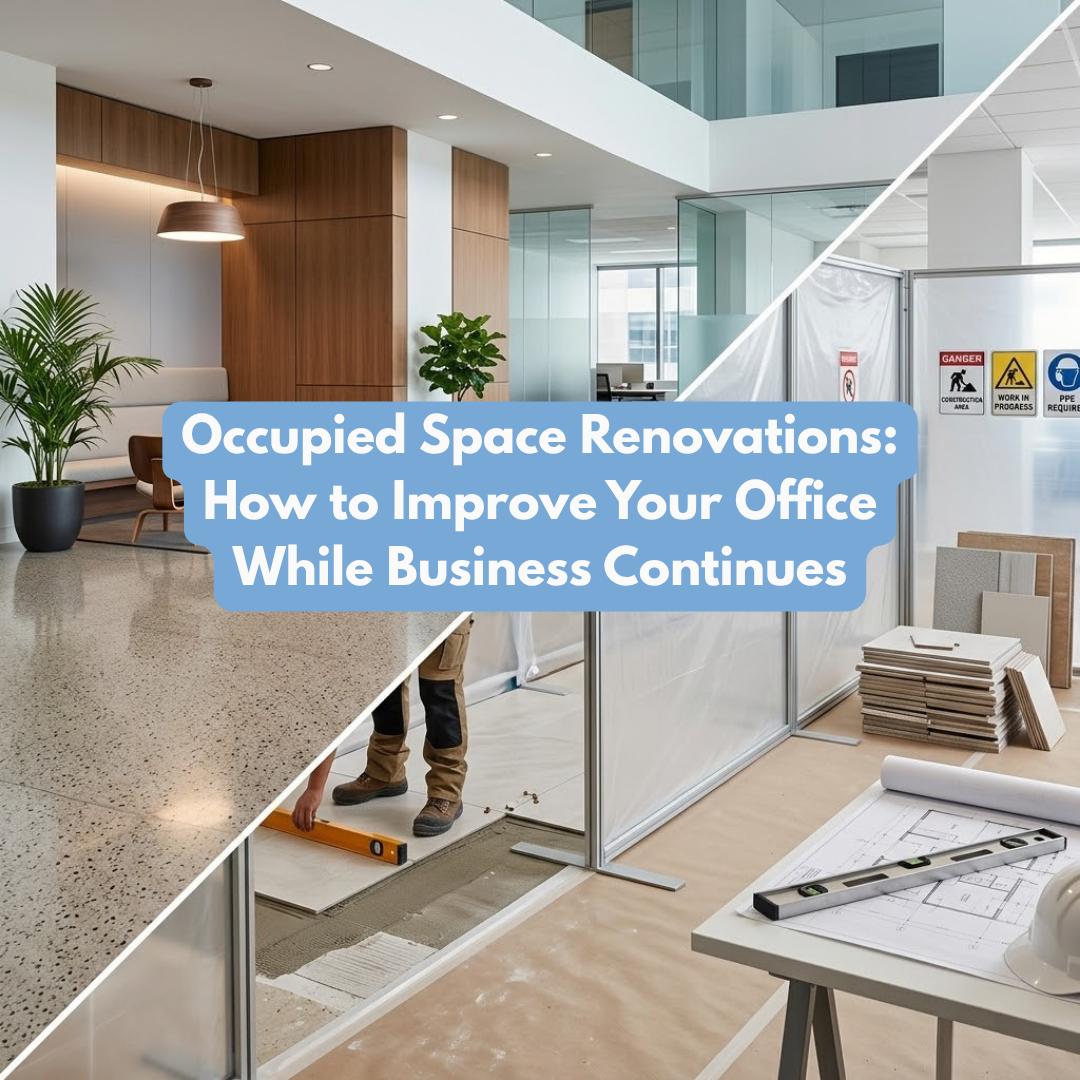
- Dust containment barriers
- Professional appearance in common areas
- Safe separation between workers and occupants
Renovation zones may be temporary, but impressions can last.
4. Prioritize Safety Without Creating Fear
Construction activity naturally raises concern among occupants. Tools, deliveries, temporary closures, and unfamiliar personnel can make people uneasy if not managed properly.
A strong occupied renovation plan creates visible order.
That includes:
- Controlled access to work zones
- Clear emergency egress routes
- Consistent worker identification
- Noise and air quality controls
- Frequent inspections of temporary protections
People feel more comfortable when they can see that safety is being actively managed.
5. Communicate Constantly
Silence creates frustration.
Even when a project is going smoothly, occupants become anxious if they do not know what is happening next.
Regular updates should be simple and useful:
- This week’s planned activities
- Areas impacted
- Expected noise windows
- Elevator or access changes
- Milestone progress
- Upcoming schedule adjustments
The more informed people feel, the more cooperative they become.
Why Delaying Renovations Can Be More Disruptive Than Doing Them
Many owners postpone needed improvements because they fear short-term inconvenience.
But delays often create larger long-term problems.
Outdated common areas can weaken leasing momentum. Aging finishes can affect tenant satisfaction. Deferred system upgrades can turn into emergency repairs. Vacant suites can sit longer when they are not market ready.
A planned renovation is usually far less disruptive than an unplanned failure.
Thoughtful improvements protect asset value, tenant retention, and long-term competitiveness.
What Successful Occupied Renovations Really Look Like
The best occupied office projects are often the least noticeable.
Employees arrive and leave with minimal interruption. Tenants stay informed. Shared areas remain presentable. Milestones are met. Improvements appear steadily without chaos.
That outcome rarely happens by accident. It comes from preparation, sequencing, communication, and disciplined execution.
The Opportunity for Office Owners
Today’s tenants expect more from office buildings. They want attractive common spaces, updated amenities, reliable infrastructure, and environments that support productivity.
For many owners, the path to meeting those expectations does not require waiting for an empty building. It requires a renovation strategy built for occupancy.
That means understanding that the real mission is bigger than construction.
It is preserving daily operations while creating a better workplace.
When that balance is achieved, renovations become more than a project. They become a strategic advantage.